Between roughly 8 and 18 weeks a chicken is done being a chick and nowhere near being a layer — and this is the stage where flocks actually get ruined. Three decisions carry it: switching feed from starter to grower (and not to layer), moving birds outside when feathers and weather line up rather than on a calendar date, and integrating them with an existing flock slowly enough that nobody gets hurt. It’s unglamorous, which is why nobody writes about it — but crowding, feather-pecking, and bad habits all start here, and they don’t leave.
Here’s how to run the teenage months.
Feed: off starter, but not onto layer
Around 8 weeks, switch from chick starter to grower feed — 16–18% protein, low calcium. The mistake that matters is jumping straight to layer feed because the bag says “chicken”: layer ration runs about 4% calcium, which a hen in lay needs for shells and a growing bird’s kidneys have to deal with. Grower until the first egg shows up, around 18–22 weeks — we covered the layer switch in the layer flock guide.
If your feed store carries a combined “starter-grower,” simpler still — run it straight through. Add a dish of poultry grit once the birds are on grass, treats, or anything beyond crumble. And as always, a fresh bag from the local feed store beats anything shipped — growers eat more than you expect, and this stage is where the feed bill gets real.
When can they go outside? Feathers plus weather, not a date
By 6–8 weeks a chick is fully feathered, and a feathered bird handles cold far better than most first-timers believe — near-freezing nights are fine once they’re acclimated, as long as the housing is dry and out of the wind. Wet and windy is what kills, not cold.
So the answer is conditional, Canadian-style: check your overnight lows, not the calendar. A spring hatch in the Okanagan or southern Alberta is usually outside full-time by late May with nothing but a dry coop. Harden them off like tomato seedlings — day trips outside for a week or so, in at night, then out for good. A fall batch is the harder path: they’ll hit real winter at half-grown, and then wind protection and dry bedding matter far more than heat ever will.
Space: where the problems start
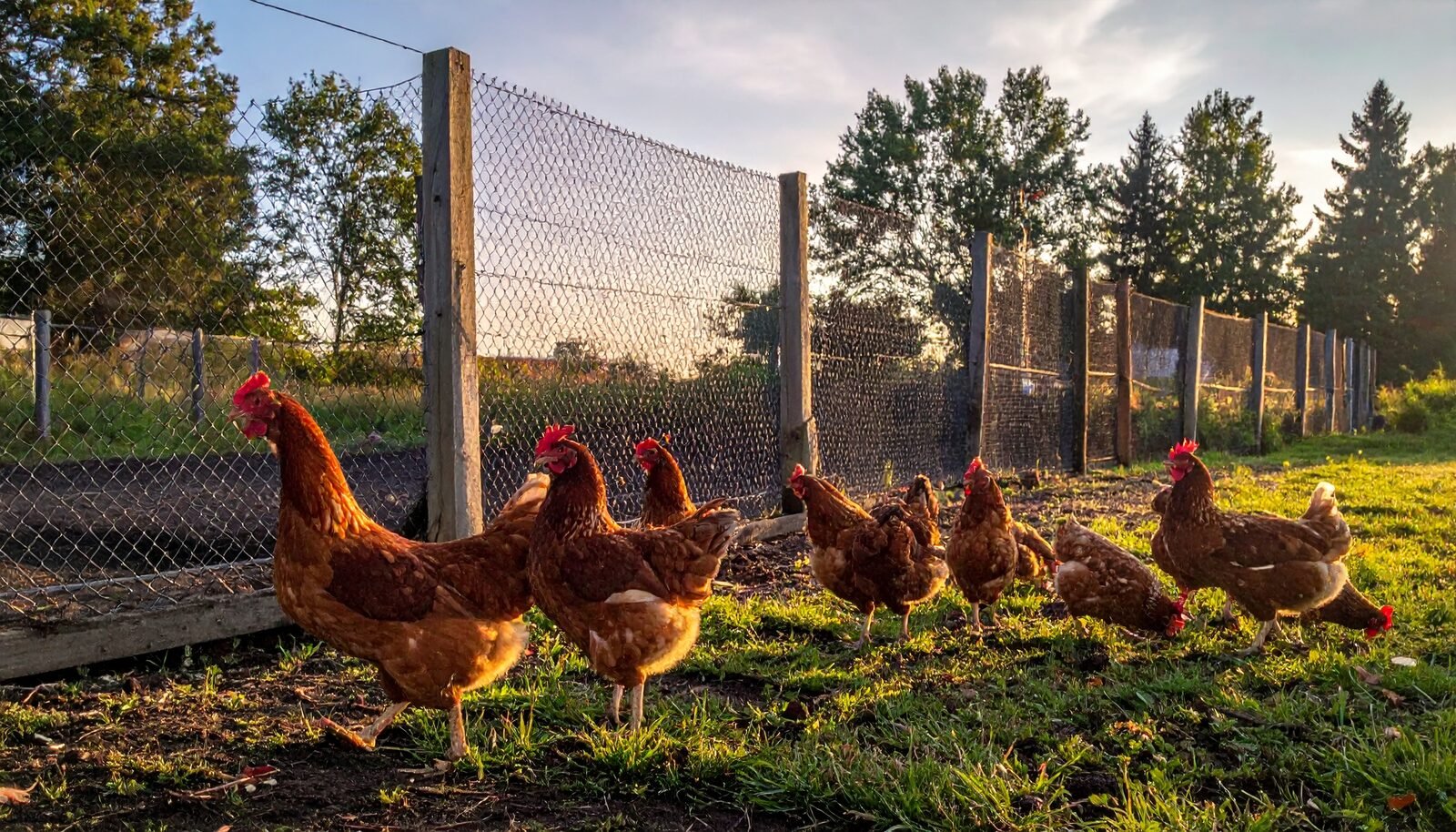
Growers need more room than the brooder math suggested, and crowding at this stage is how feather-pecking starts — a habit that, once learned, follows a flock for life. Plan for roughly 0.3 m² per bird inside the coop and around 1 m² each in the run at this age, and treat those as floors, not targets. If the birds are picking at each other, the honest fix is almost always more space, not more distractions — though a stump, a branch, or a pallet leaned against the fence gives low-ranking birds somewhere to break line of sight, and that helps too.
This is also peak predator size. Growers are exactly what a hawk, a raccoon, or a neighbourhood dog is shopping for — big enough to be worth it, dumb enough to be easy. Secure night housing with proper latches, hardware cloth over any opening, and netting overhead if hawks work your area. We run heavy bird netting over the coop run for exactly this — it’s the same netting that keeps critters out of the garden.
Integration: see-don’t-touch, then mix
Adding growers to an existing flock cold is how birds get hurt. The method that works is boring and takes two weeks:
Stage one — see, don’t touch. Pen the growers beside the main flock with wire between them for one to two weeks. Everyone sorts out who’s who through the fence, where nobody can back it up with beaks. A couple of temporary panels dividing the run does this cleanly.
Stage two — mix with exits. Open it up when the growers are close to adult size — usually 16–18 weeks — and stack the deck: extra feed and water stations so the seniors can’t guard the only feeder, clutter to duck behind, and room to run. Expect a few days of chest-bumping while the pecking order rewrites itself; that’s normal. Drawn blood is not — pull the injured bird, let it heal, restart slowly.
One more rule that isn’t optional: birds from someone else’s flock quarantine for 30 days before any of this. Two weeks of see-don’t-touch fixes politics; it does nothing for disease.
The cockerel question
If you bought straight-run, by 8–12 weeks the crowing starts and you’ll know exactly what you’re dealing with. Decide early. Most BC and Alberta towns and cities that allow backyard hens prohibit roosters outright — acreage is your own call — and every week of indecision is feed money into a bird you may not keep. Rehome him, or it’s freezer camp; both are kinder than a cramped bachelor pen you improvised in November. Unglamorous, like everything else about this stage — but it’s the decision that sneaks up on people.
The growers kit
The honest truth about this stage: it buys less gear and more fencing. Most of what growers need is space. The short list — links go to Amazon.ca; there’s a matching Growers section on our Gear We Use page.
- Hanging feeder — bigger appetites, more birds at the trough; hang it at back height to keep bedding out. Shop on Amazon.ca →
- Cup waterers — the same bucket setup scales up with the flock. Shop on Amazon.ca →
- Poultry grit — required the day they’re on anything but crumble. Shop on Amazon.ca →
- Hardware cloth — every gap a raccoon can reach through, closed. Shop on Amazon.ca →
- Bird netting — the overhead answer to hawks. Shop on Amazon.ca →
The rest of it — the grow-out pen, the see-don’t-touch divider — is fencing, and that’s below.
Shop grow-out fencing at the farm
The whole growers stage runs on a good pen: see our temporary fence panels for the see-don’t-touch divider and our welded wire mesh panels for the grow-out run itself. We’re in Summerland, South Okanagan — get in touch for sizing, pricing and availability.
A quick note: The Humble Goat Stead is a participant in the Amazon.ca Associates Program. As an Amazon Associate we earn from qualifying purchases — at no extra cost to you. It helps keep the farm going, and we only point you to things we’d actually use.